We read 108 studies on AI in education. Where were the students?
AI is moving into classrooms. My coauthors and I looked at who gets to shape it, and I think we should talk about who doesn't.
Reading 108 research studies is a bit like watching every season of a long TV show. Somewhere in the middle you forget who everyone is, but by the end you can see the pattern.
My coauthors and I did it so you don't have to. We wanted to know one thing: when people build AI and data tools for education, how much do humans matter in the process?
AI in the passenger seat
There's plenty to like. These tools can make learning more personal and help teachers make better decisions. There's plenty to worry about too: privacy, bias, and people slowly losing their say.
I find it helps to ask two questions about any tool. How much does the computer do by itself? How much can a person steer? Put them together and you get four boxes.
- Little of either: a slide deck. It sits there.
- You steer, it does little: a dashboard you can customise.
- It does a lot, you can't steer: feedback sent out automatically. Enjoy the ride.
- It does a lot, and you steer: clever tools that still answer to people.
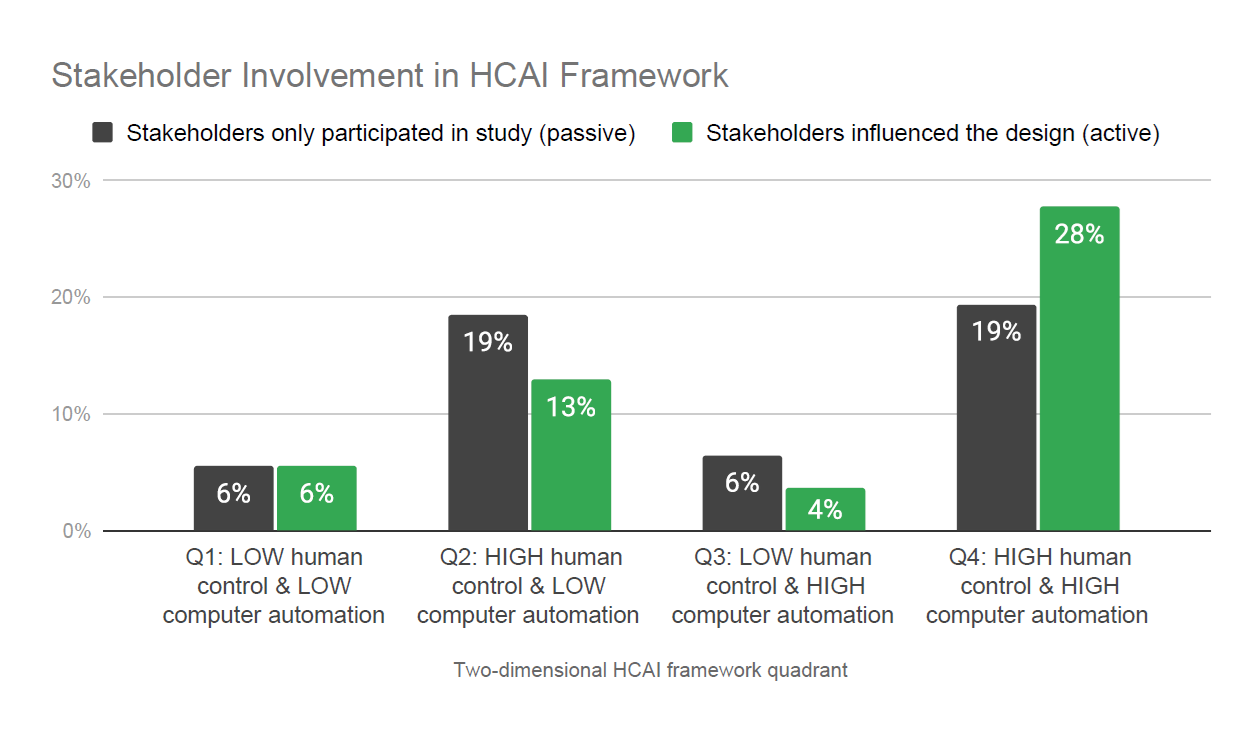
I think the last box is where we want to be. Good news: it was the biggest one in our review, at nearly half of the studies.
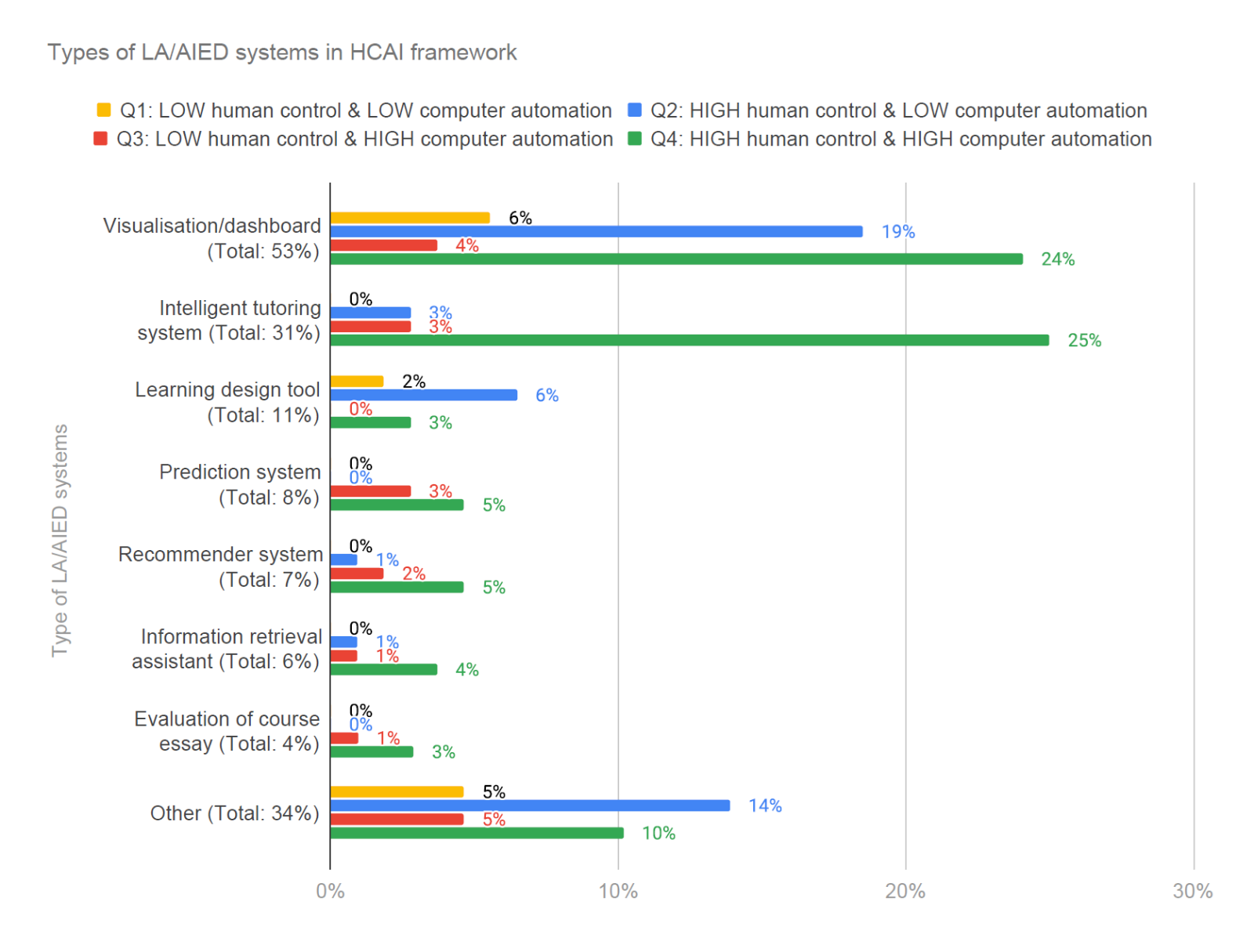
Dashboards and tutoring systems were the two kinds of tool we saw again and again.
So who got to design it?
This is the chart that bothers me.
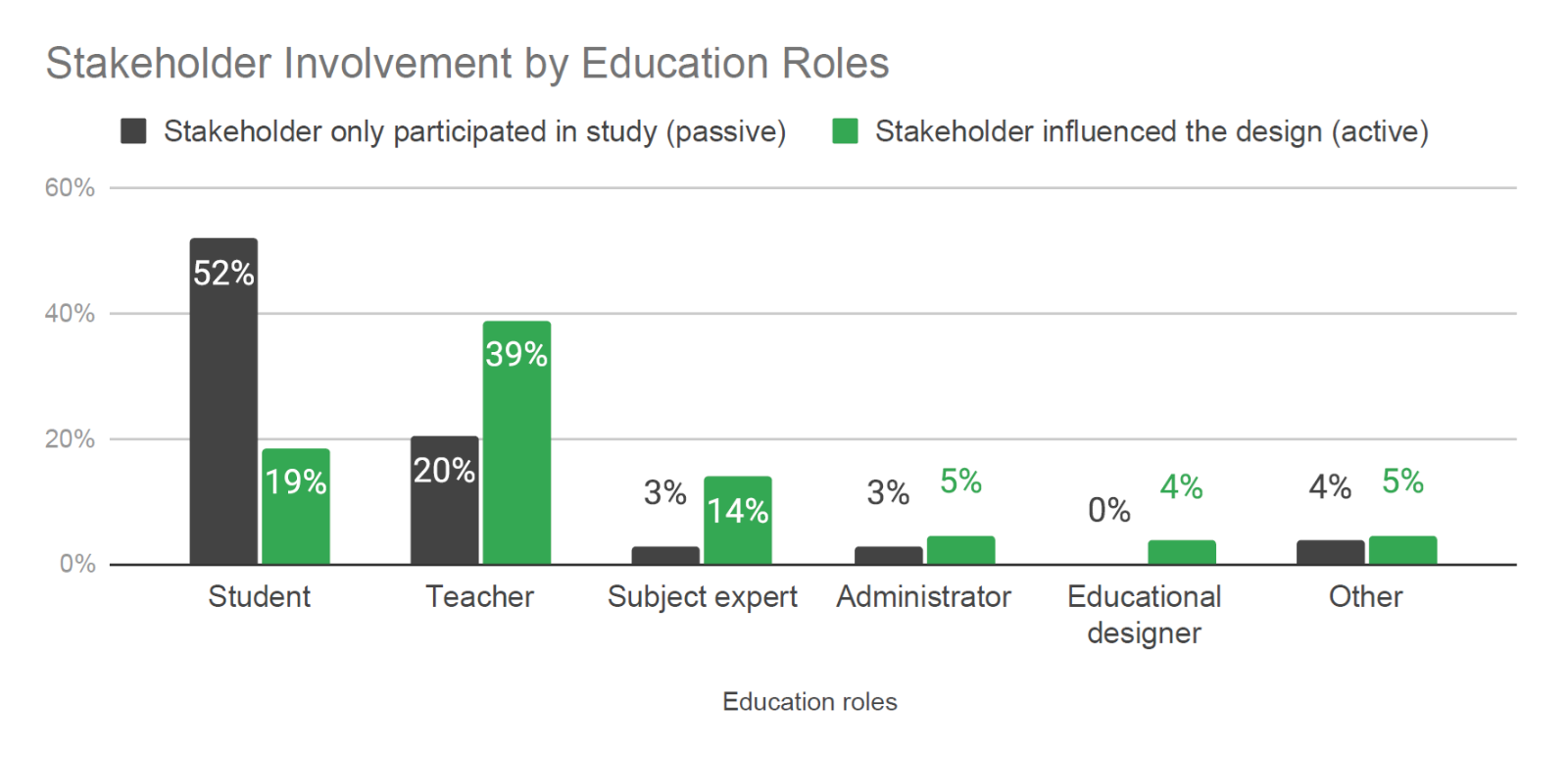
Students took part in about half of the studies without shaping anything. They influenced the design in only 19 percent. Teachers did so about twice as often.
In other words, we test on students, then design with someone else. I don't think anyone means harm by it. Students are easy to survey and harder to invite into a design meeting. But they're the ones who live with the result.
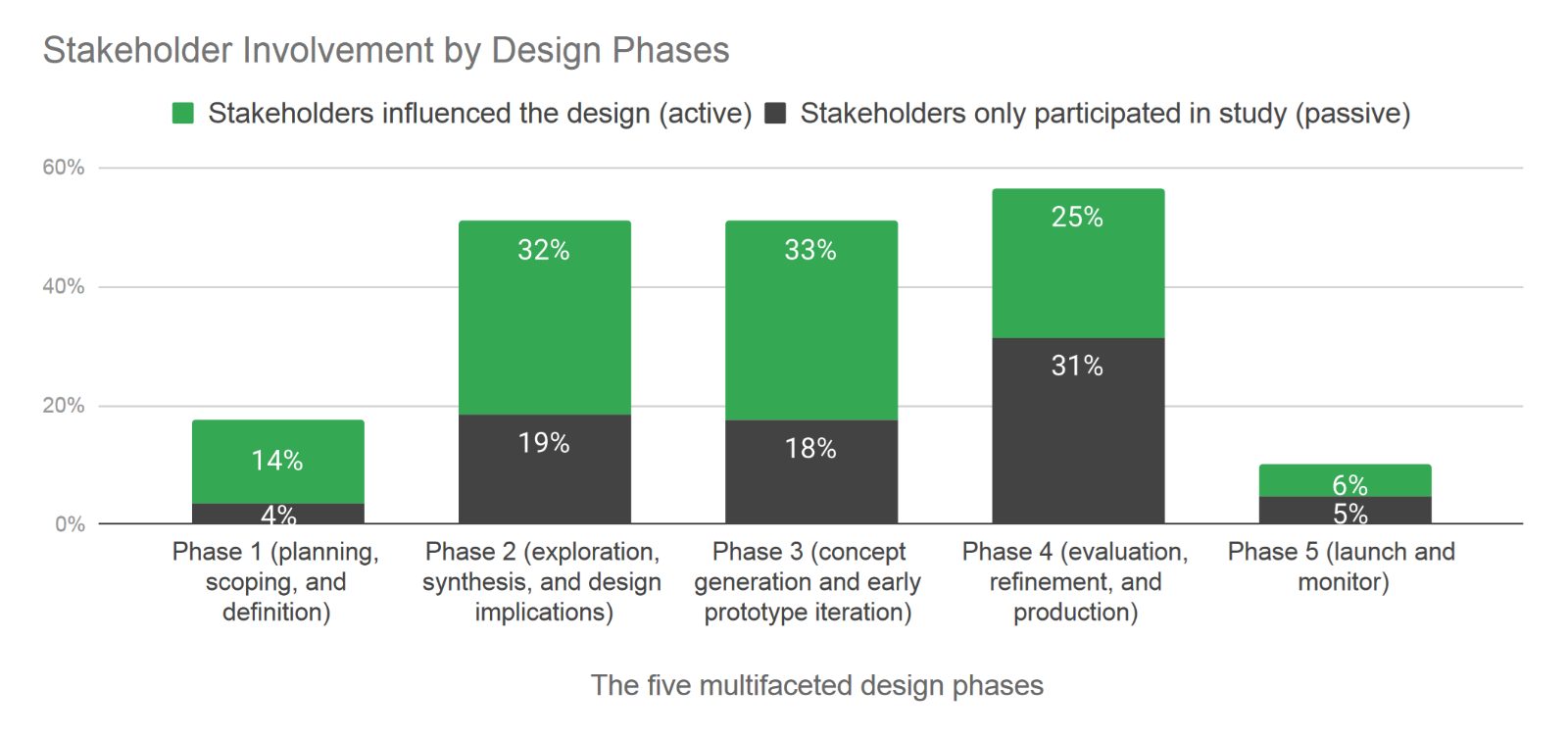
Timing matters as well. People were mostly invited in the middle of a project. Few were there at the start, when you decide what to build, or at the end, when it's out in the world.
We also found that safety, reliability and trust were often overlooked. I feel those belong at the front, not in the “future work” paragraph at the end.
What I'd ask for
- Invite people early, and keep them. From the first sketch to long after launch.
- Let students help set the dial. They should have a say in how much the AI decides.
- Treat safety and trust as features. If it isn't in the plan, it won't be in the product.
Technology in education should give people more power, not less. If you're building or buying one of these tools, ask one question in your next meeting: which student helped to design this? If the room goes quiet, you've found your next step.
Read the paper
Human-centred learning analytics and AI in education: A systematic literature review (opens in a new tab), Computers and Education: Artificial Intelligence, 2024.